
In the Company of Wise Women
Ten women. One extraordinary journey. A once-in-a-lifetime adventure in the Galápagos Islands, shared in a nurturing space of yoga and sisterhood.
Our group spanned generations. Laura, Linda, Loraine, Janis, and Chris were in their 70s—wise, radiant, and full of life. Despite the years etched into their bodies, they moved with intention and joy, showing up to every yoga class led by our gifted teacher and guide Tricia , who gracefully adapted each session to meet us where we were. These women had weathered life’s storms—some had lost partners—but they had created rich, supportive communities and knew how to savor life. They were each inspiring in their own subtle but grounded ways.
Then there was Joy, Melissa, Kendra, Tricia, and me—women around 50s, navigating transitions of our own. Some of us were recent empty nesters; others were adjusting to a new rhythm of life, no longer tethered to the daily demands of child-rearing. We were in the thick of hormonal shifts, reckoning with change, rediscovering parts of ourselves. And we found connection in it all—sharing stories of where we’d been and where we were going.
Most of the women came from the South Shore of Massachusetts—deeply rooted in their local communities, bound by shared history and long-standing family ties. I was the outsider, a newer transplant to Boston. But from the very start, I felt welcomed. Conversation flowed easily—touching on everything from motherhood and careers to politics, education, health, faith, and the state of the world. We were different, but we shared the experience of being American women navigating the ever-shifting terrain of modern life, aging, and reinvention.
By the end, they’d invited me into their world—bike rides on the Cape, a visit to Plymouth, a seat at the table beyond the islands. I didn’t just feel included. I felt embraced.
Nature Encounters: Semilla Verde
Nature unfolded around us with awe-inspiring power. The Galápagos Islands, with their stark beauty and endemic wonders, were our living classroom.
Semilla Verde, our retreat, was tucked in the cloud forest of Santa Cruz Island. This former private home, now a boutique yoga resort, was lovingly reforested by its British owners. From my room, I had a sweeping view of Tortuga Bay and, in the distance, the outline of Floreana Island—the first island to be inhabited in the Galápagos.
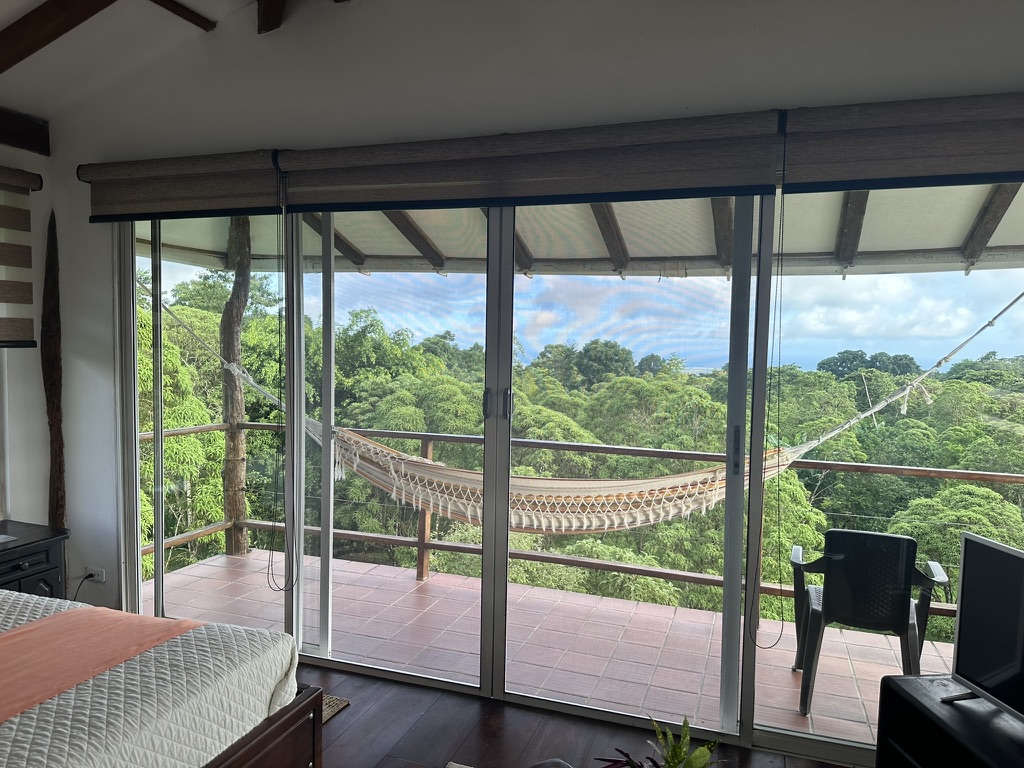
Floreana, with only around 200 residents, has a storied past involving a German doctor and a scandalous Austrian baroness—the inspiration behind The Galapagos Affair. In contrast, Santa Cruz, our base, is the most populated island with about 30,000 residents. While the town of Puerto Ayora buzzed with tourists, shops, and the Charles Darwin Station, Semilla Verde offered solitude—an oasis in the clouds.
My favorite moments were the quiet ones—reading in a hammock, swaying gently above the forested farm where the owners cultivated tortoise-friendly coffee. Yellow warblers flitted from tree branches to the patio, their tiny bodies a blur of motion. It was blissful.
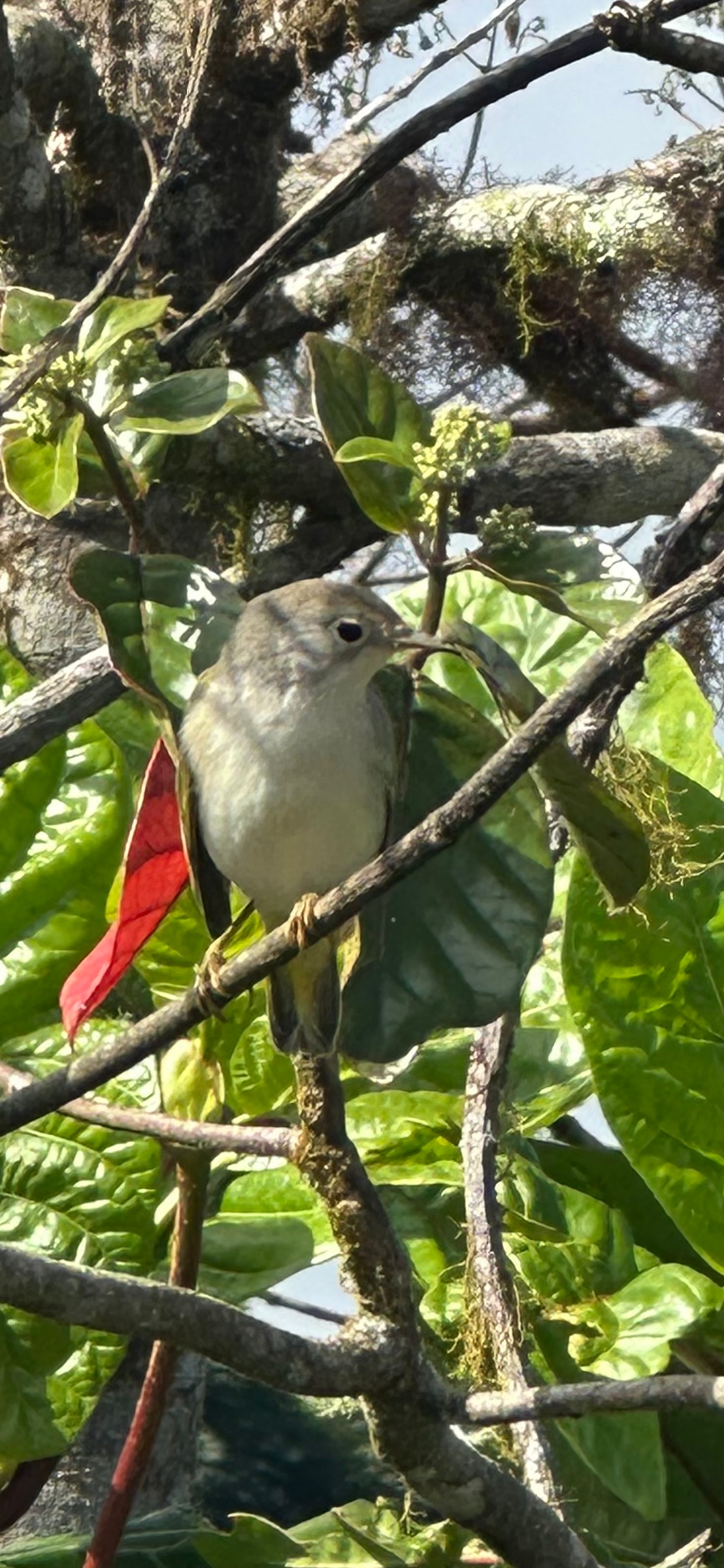
A juvenile warbler
On peaceful walks through the forest, I encountered giant tortoises—ancient, deliberate beings who seemed to embody the slow rhythm of the island. One pair startled me with a loud hiss, asserting their territory. Mostly, though, they tolerated our presence—unless we wandered too close.
One tortoise, named Oscar, had even become friends with Saba, the retreat’s gentle dog. Saba greeted us each day with soulful eyes and a wagging tail, while Negra, the old black cat, lounged around the property, lazily watching the world with feline indifference. The three—tortoise, dog, and cat—seemed to belong to an enchanted stillness that made this place feel otherworldly.
Snorkeling: Into the Blue
One of the most magical parts of the trip was snorkeling—a challenge I embraced despite my longtime discomfort in the water. With a flotation device and encouragement from our amazing naturalist guide, Stephanie Shrever, I decided to dive in.
Our first snorkel was after a hike on North Seymour Island, where we watched the dazzling courtship dances of blue-footed boobies and the magnificent frigatebirds. Then it was time to cool off. I jumped into the water—nervous, but determined. A wave filled my snorkel and panic set in. But Stephanie appeared in an instant, guiding me to a life raft. Her calm presence steadied me. I spit out the salty water, caught my breath, and began to float.

A male great frigate with inflated gular pouch
And then the fish…..So many fish. I swam among king angelfish, parrotfish, trumpetfish, surgeonfish, and one remarkable species: the guinea fowl puffer, deep indigo with white spots. It felt like swimming inside a living aquarium—surreal and mesmerizing.
At Santa Fe Island, the underwater world came even more alive. I swam beside graceful sea turtles, their movements slow and fluid, gliding through time itself. These ancient reptiles can live for more than a hundred years. Though they breathe air, they can hold their breath for hours while resting underwater. Watching them slip silently through the turquoise sea was like witnessing a living relic from a prehistoric world.
The sea lions, though, were the true performers. Playful pups tumbled through the surf, chasing each other and leaping in and out of the waves. Each colony is ruled by a dominant male, or beachmaster, who fiercely guards his harem of 10-15 cows. He rarely eats during the breeding season, conserving energy for the exhausting task of defending his territory. The pups, who nurse for up to three years, face tough odds—only about one in three survive. Mothers reserve their milk for their own young, so orphans must learn to hunt early or perish.

A Sea Lion Colony
When they’re not in the water, sea lions spend hours basking in the sun. Their thick blubber helps them survive the cold ocean currents, but on land, it leaves them vulnerable to overheating. Sunbathing allows them to thermoregulate, like solar panels soaking in warmth. Often, we saw them in perfect relaxation, eyes closed, softly snoring on the rocks.
Back in the water, they transformed into underwater acrobats. Several sea lions and their pups frolicked in the surf just feet away from us. These wild encounters, both serene and exhilarating, remain etched in my memory.
Volcanic Vistas and Penguin Encounters
Our longest boat ride took us to Bartolomé Island, a young and dramatic landscape shaped by volcanic activity. Jagged lava fields, rust-colored ash cones, and windswept ridges made it feel almost otherworldly – like we were on the moon. Adjacent to it was the larger Santiago Island, also uninhabited but teeming with life.
The island’s iconic landmark, Pinnacle Rock, juts sharply from the sea, framed by twin crescent bays. It’s the most photographed spot in the Galápagos, and standing at its viewpoint after a hike up 376 wooden steps, we could see why.
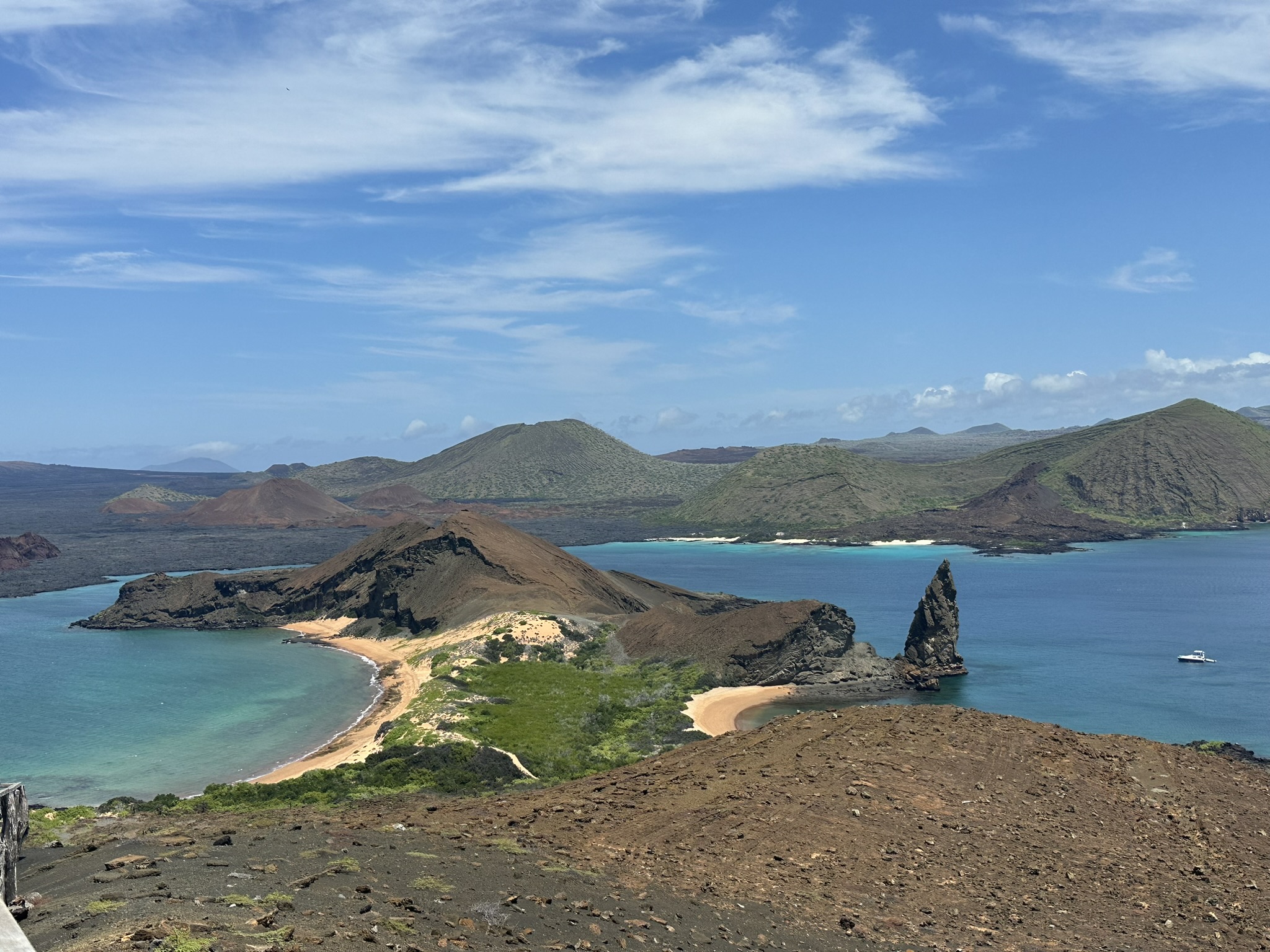
Pinnacle Rock
We spotted Galápagos hawks circling overhead, and lava lizards darting across the grey lichen on the slopes. On a relaxed panga ride along the shore, we were lucky to encounter a small colony of Galápagos penguins, perched on lava rock ledges, entirely unbothered by our presence. A pair even mated in full view, oblivious to their audience. Nearby, a sea lion family lounged lazily on a rocky platform, basking in the sun after a morning hunt.
Galápagos penguins are the only penguin species found north of the equator. These petite birds, just under 20 inches tall, are the second smallest penguins in the world. Uniquely adapted to a tropical climate, they survive thanks to the cool, nutrient-rich currents like the Humboldt and Cromwell, which temper the heat of the equatorial sun. They nest in shaded lava crevices to avoid overheating and rely heavily on the balance of marine and climate conditions for survival.

Galapagos Penguins
After Bartolomé, we cruised to Sombrero Chino, a tiny island shaped like a Chinese hat. Between it and Santiago Island lies a narrow channel where warm and cold currents meet—creating a perfect environment for marine life. We had our final snorkel of this trip in this channel . Thousands of shimmering salema fish moved as one beneath us, like living silver clouds.
A stealthy white-tipped reef shark cruised by, startling at first, but Stephanie calmly reminded us it was harmless. And then came the show-stealer: a playful sea lion pup who popped up beside us, dove down with a twirl, and surfaced again. It played with a sea urchin like a toy, tossing it into the air and diving after it again and again. The more we laughed, the more it performed. It was hard to leave.
These were the moments one can only dream of —when nature reached out and invited us to be part of the spectacle. Unscripted, intimate, unforgettable.
The Sea Finch & Reflections
Back aboard The Sea Finch, our day ended with quiet luxury. The crew had set a long table with crisp white linens, and the boat’s chef—quiet yet talented—served a delicious meal crafted from a tiny kitchen with impressive flair. He prepared local Ecuadorian dishes: sweet fried plantains, golden yucca fries, gently spiced rice with vegetables, and a fragrant fish in curry sauce (which I didn’t eat, but appreciated for its aroma and presentation). After hours in the sun and sea, every bite tasted like a reward.
I stretched out on a cushioned bench as the boat rocked gently with the waves, the sound of the sea a soft lullaby. Within minutes, I drifted into a deep nap, carried by the rhythm of the Pacific and the quiet joy of a day fully lived.
This trip was, without question, the journey of a lifetime. It was more than just a vacation—it was a time of connection, discovery, and transformation. The wildlife, the landscapes, and the shared stories with women of different ages and stages created a mosaic of meaning that I will carry with me.
And there’s still more to tell.
In the next blog, I’ll write about Darwin, the finches, and the brilliant spark of curiosity that turned these volcanic islands into the birthplace of a revolutionary idea. The Galápagos didn’t just shape nature—they shaped the very way we understand it.
 Random Musings of a wandering heart doctor
A beautiful write up that took me right to the Galapagos and certainly will be one for travels.
LikeLike